RIOMAGGIORE, Castle - Ai Voice
 Language: English / USA

The Castle of Riomaggiore, also known as the Castle of the Marquises of Turcotti or Castellazzo di Cerricò, stands high above the village and is one of its most recognizable historic landmarks. Its origins date back to the second half of the 13th century, when the Turcotti marquises, lords of the area, decided to build a fortification to protect the local community. When the territory later came under the control of the Republic of Genoa, in the 15th century the castle was reinforced and expanded, strengthening its defensive role along the coast.
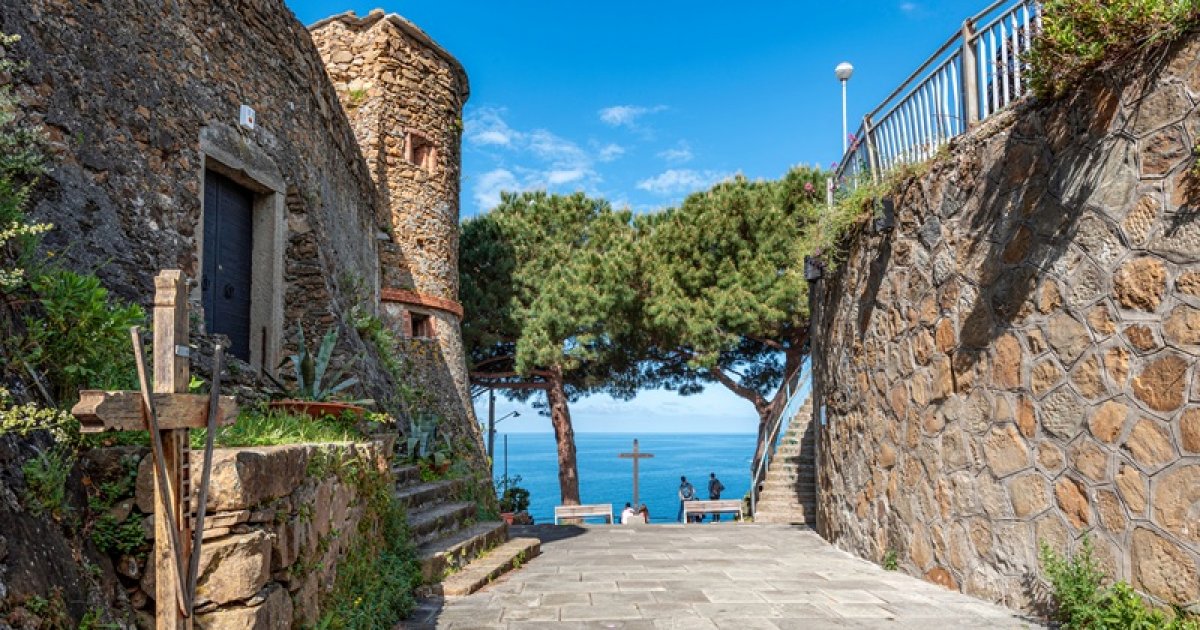
From an architectural point of view, the structure has a regular, rectangular layout, with solid walls made of local stone that give it a stern yet perfectly harmonious appearance within the surrounding landscape. Two circular towers at the corners further reinforced the building, making it more resistant to attacks and suitable for defense posts. The overall design is simple and functional, typical of the Ligurian military architecture of the time.
Beyond its historical significance, what strikes visitors most is its position. From the terrace in front of the castle, there is a spectacular view of the sea of the Cinque Terre and the colorful houses of Riomaggiore, which seem to climb up the hill right beneath the walls.
Inside, the rooms are plain and unadorned, as is often the case with structures of military origin. In more recent centuries, the castle went through periods of neglect, but significant restoration efforts have brought it back to life. Today, it is open to the public and used for cultural events, exhibitions, and art shows.
An interesting fact: For centuries, locals have affectionately referred to this structure as the “Castellazzo.” The term, typical of the Ligurian dialect, highlights not only the sturdiness of the building but also the deep emotional bond between the inhabitants and their ancient stronghold — a place that has come to be seen not merely as a military fortress but as a collective symbol and an integral part of the village’s identity.