ARCHAEOLOGICAL MUSEUM, Secret Cabinet – First Floor - Ai Voice
 Language: English / USA

Now you’re entering one of the museum’s most intriguing sections: the Secret Cabinet.
Here you’ll find over two hundred artifacts, mostly from Pompeii and Herculaneum—depictions that, for centuries, were considered far too scandalous to be displayed in public.
The story behind these objects is fascinating.
When they were first uncovered during the Bourbon excavations in the 18th century, the rulers and scholars of the time deemed them utterly incompatible with the morals of their age. Thus, a “museum within the museum” was born: a locked room accessible only to scholars or men of a certain social and cultural standing. Women and young people were, of course, strictly excluded.
It wasn’t until the year 2000 that the collection was finally opened to the public, accompanied by modern explanations and historical context.
So, what will you see in these rooms? Not merely erotic imagery in the modern sense, but rather evidence of a completely different mindset—one in which what may appear excessive to us today originally symbolized good fortune, fertility, and prosperity.
You’ll discover, for example, that in Pompeian gardens there once stood phallic statues meant to guard fertility and abundance; that bronze tintinnabula—small bells shaped like male genitals—were hung at the entrances of shops, their gentle tinkling believed to ward off bad luck; and that lupanaria, or houses of pleasure, were adorned with small erotic paintings that served as genuine illustrated “menus” of the services offered.
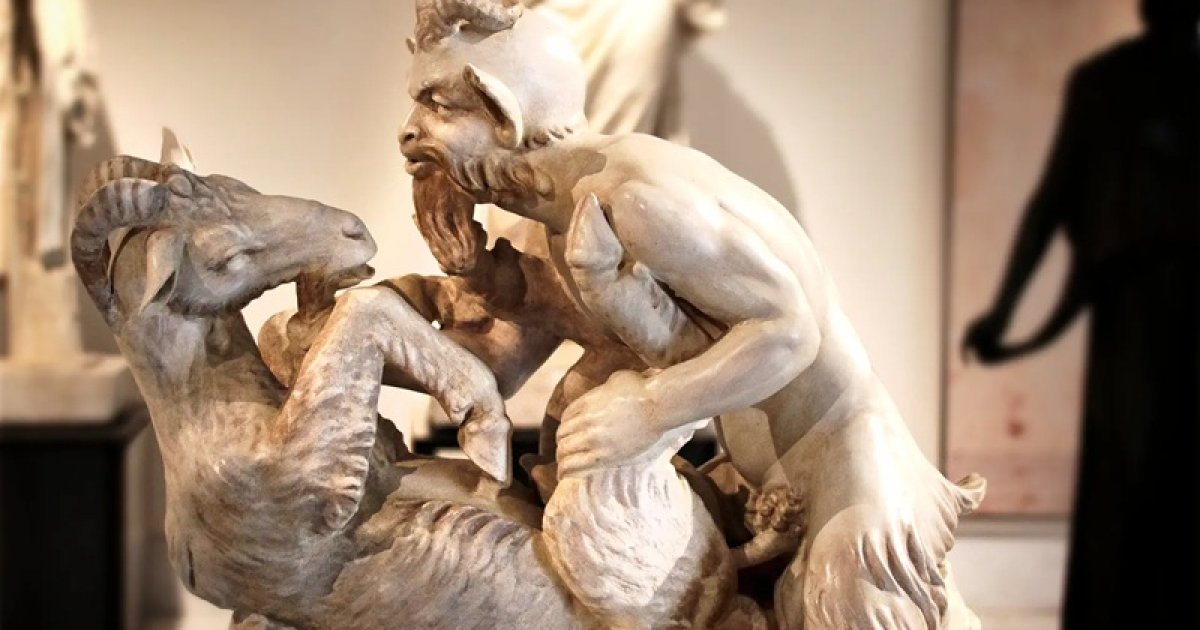
Among the most famous pieces is the marble group of Pan and the Goat, found in the Villa of the Papyri at Herculaneum—an artwork that shocked early visitors and still astonishes today for its blend of ironic realism and symbolic depth. You’ll also see small fresco panels that once decorated the bedrooms of Pompeian houses, where mythological figures such as Leda and the Swan or Venus in a bikini were portrayed with grace and naturalness.
By exploring the Secret Cabinet, you’ll uncover a private and surprising side of the Roman world—one where eros, myth, and daily life coexisted freely, intertwined with religion, humor, and wishes for prosperity. And perhaps, rather than shocking us, these artifacts invite reflection on how profoundly our ideas of modesty and morality have changed over the centuries.
Here’s an interesting fact: The tintinnabula were not simply decorative bells. The ancient Romans believed that their ringing could drive away evil spirits and the evil eye, while the phallic images themselves ensured good fortune and prosperity. That’s why they were hung not only in private homes but also in shops and public places.