KNIGHTS’ SQUARE, Chiesa Di Santo Stefano Dei Cavalieri - Ai Voice
 Language: English / USA

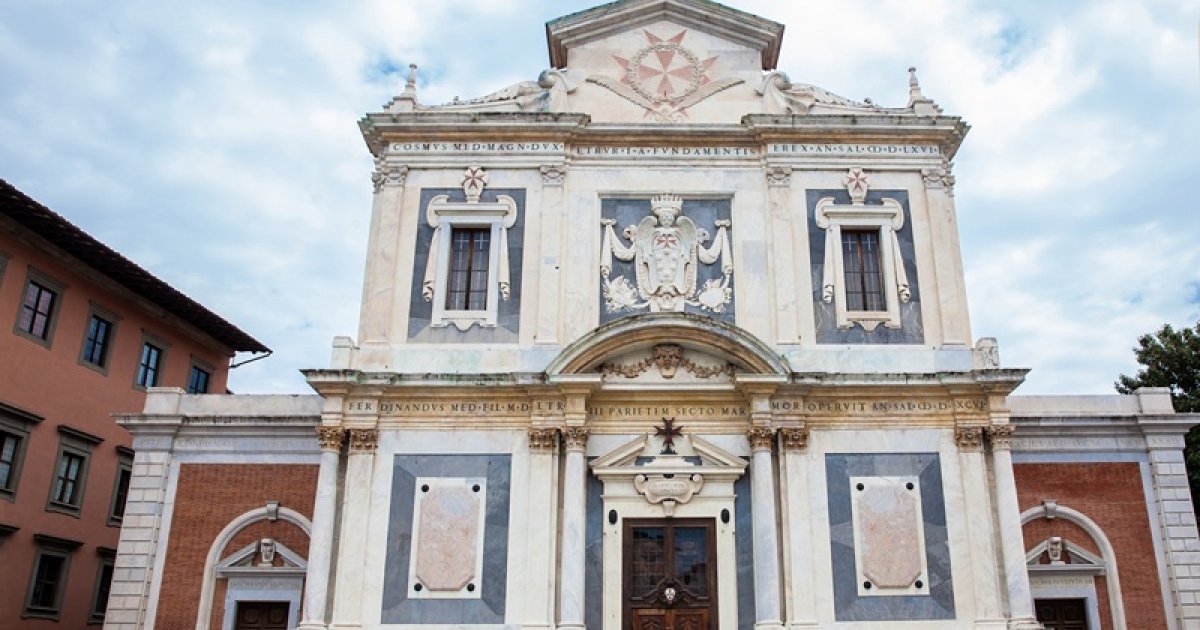
The Church of St. Stephen of the Knights, built specifically as the spiritual temple of the Order to which it is dedicated, was commissioned by the Medici to give a religious heart to the new square.
But what exactly was the Order of the Knights of St. Stephen, Pope and Martyr?
Founded in 1561 by Cosimo I de’ Medici, it was a military and monastic order that combined chivalric ideals with religious devotion. Its mission was to defend the Christian faith and safeguard Mediterranean trade routes by combating Ottoman piracy. The knights — often Tuscan nobles — were both warriors and monks, and it was here, in this church, that they took their vows and received the insignia of the Order.
Cosimo I entrusted Giorgio Vasari with the design of the new building, which replaced the former Church of St. Sebastian at the Fabbriche Maggiori. The first stone was laid in 1565, and only four years later, the church was consecrated.
The white marble façade was completed at the end of the 16th century by Don Giovanni de’ Medici and Alessandro Pieroni. At its center, the coats of arms of the Medici family and the Order of St. Stephen stand out — a true statement of dynastic power. To the right rises the bell tower, built between 1570 and 1572 to Vasari’s design, its triple-arched openings giving an elegant lightness to the structure.
After admiring the exterior, pause and resume once inside.
Upon entering, you’ll find a single nave, originally without side chapels. In the 17th century, two small rooms were added on either side, used by the knights to prepare for ceremonies — a ritual known as the vesting.
The wooden coffered ceiling is one of the church’s masterpieces. Between gilded frames, six large paintings celebrate the Order’s triumphs — such as the Battle of Lepanto — with scenes exalting faith, courage, and Christian victories.
Along the side walls hang naval banners, lanterns, and authentic trophies from Mediterranean campaigns — tangible relics of the knights’ heroic exploits.
Look at the counter-façade and the nave walls: here you can see five large monochrome canvases illustrating episodes from the life and martyrdom of St. Stephen, Pope and Martyr.
At the end of the nave stands the main altar, a true Baroque masterpiece created between 1702 and 1709 by Giovan Battista Foggini, made of polychrome marble and gilded bronze. At its center appears St. Stephen, flanked by allegories of Religion and Faith. On the throne behind him is a bronze relief depicting his Decapitation, while beneath the altar lies the urn containing his relics, brought to Pisa in 1682.
Around the presbytery, you’ll notice two important works: The Stoning of St. Stephen by Giorgio Vasari, and The Nativity of Christ by Bronzino.
Let me leave you with an interesting fact: the church and the Order were dedicated to St. Stephen, Pope and Martyr, because his feast day — August 2 — coincided with two major victories of the Medici family, in 1537 and 1554.