KNIGHTS’ SQUARE, Presentation - Ai Voice
 Language: English / USA

Welcome to Knights’ Square, the second most important historic square in Pisa. Here, alongside grand civic buildings, stands the Church of St. Stephen of the Knights: together, they tell the story of how this square has been, for centuries, the heart of civic authority and public life.
In the Middle Ages, the square was known as the Square of the Seven Roads, because seven major city streets branched out from this point. It was the political and administrative hub of medieval Pisa: the seat of government and civic assemblies met here, notably in the Palace of the Elders, the nucleus of the city’s early government.
Everything changed in the 16th century. After Pisa’s conquest by Florence in 1406, the city came under Medici rule. Cosimo I de’ Medici commissioned Giorgio Vasari to redesign the square as a stage for grand ducal power. Beginning in 1561, the site underwent decades of transformation, reshaped according to Renaissance principles.
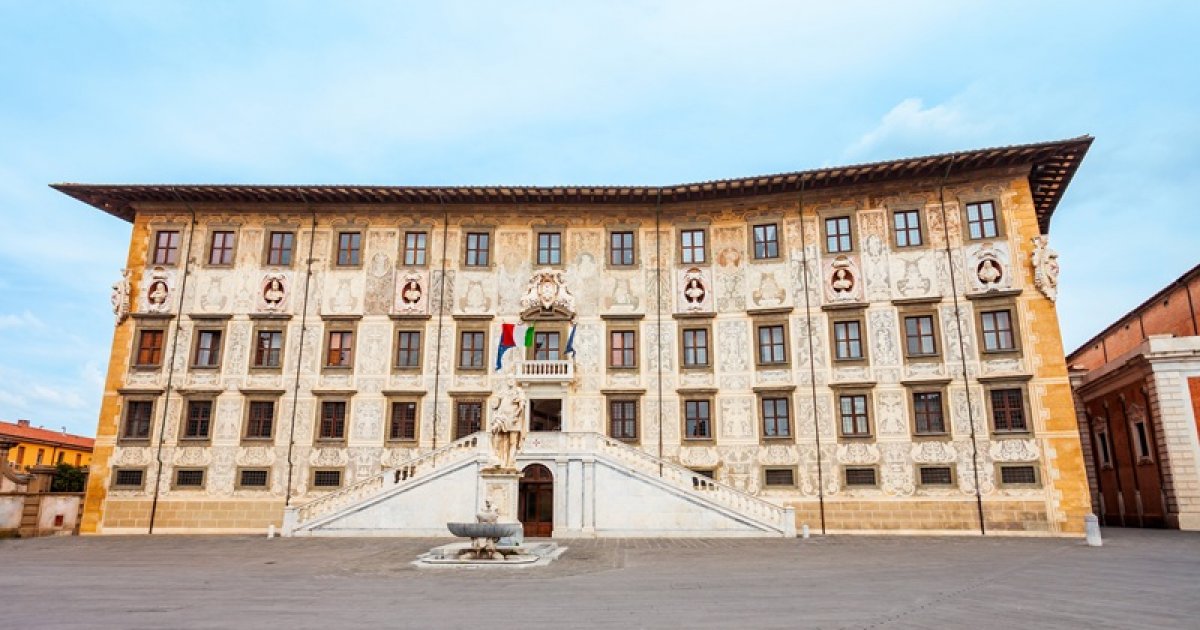
This urban renewal was tied to the creation of the Order of the Knights of St. Stephen, a chivalric institution founded by Cosimo I to defend the Tuscan coasts and protect maritime routes in the Tyrrhenian Sea. From then on, the square assumed its distinctive appearance: the Palace of the Carovana as the representative seat of the Order, St. Stephen’s Church as its place of worship, and the Clock Palace incorporating ancient medieval towers. The transformation marked Pisa’s passage from a medieval commune to a grand ducal city.
Today, the square has a different, yet fitting, role as a center of learning and leadership: the Palace of the Carovana now houses the Scuola Normale Superiore, founded during the Napoleonic era and recognized today as one of Italy’s most prestigious universities.
To get your bearings: take St. Stephen’s Church as your reference point. Directly opposite stands the Palace of the Carovana; continuing along the perimeter, you’ll spot the Clock Palace, distinguished by its central archway and clock face that integrates two ancient medieval towers.
Let me leave you with an interesting fact: the Palace of the Carovana takes its name from the carovane—the compulsory naval missions of the Knights of St. Stephen, who patrolled the seas against piracy. The original medieval Palace of the Elders, redesigned by Vasari, became the Order’s headquarters and training ground. If you stop in front of the grand staircase, you’ll notice a rich symbolic “program”: Medici coats of arms, allegorical figures, and decorative motifs that celebrate the military and institutional significance of this square.