IMPERIAL VILLA-REGIO VIII, Interior - Ai Voice
 Language: English / USA

The Villa Imperiale is especially valuable because it preserves outstanding examples of Pompeian Third and Fourth Style wall painting. Here, you can observe how Roman art evolved from the elegant, structured composition of the Third Style—defined by orderly panels and fine linear motifs—to the more theatrical and elaborate language of the Fourth Style, where painters sought not merely to decorate but to captivate and narrate mythological stories. With this evolution in mind, let’s explore the villa’s main rooms.
Among the most significant spaces is the oecus, the grand reception hall. It’s a tall and imposing room, easily recognizable by its richly decorated walls. Here, the master of the house would receive his most distinguished guests. In the lower section, you can see refined architectural motifs, while in the upper area appear mythological figures in a fully narrative style. The original frescoes depicted scenes such as Daedalus and Icarus, Theseus and the Minotaur, and Ariadne abandoned on Naxos—some of which remain partially visible today.
The triclinium, or dining room, is marked by deep red panels and Dionysian decorations, including a satyr and a maenad dancing in a sanctuary of Pan—references to wine, festivity, and the pleasures of dining, perfectly suited to a banquet setting.
More intimate is the diaeta, a room designed for relaxation and leisure. Its light-colored walls, adorned with slender candelabra and painted columns, create a bright and refined atmosphere—an ideal place to read, converse, or receive a close friend.
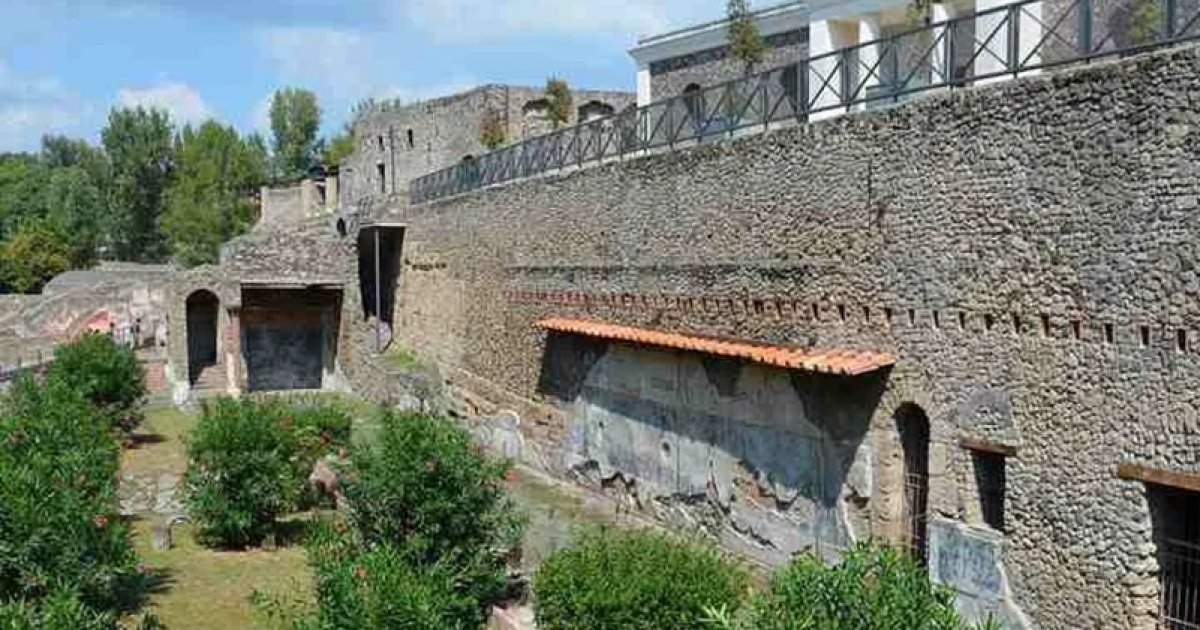
Equally magnificent must have been the peristyle, with its inner garden. Today, only the column bases remain, but it’s easy to imagine its original splendor: an elegant portico offering shade and coolness, a lush garden at the center, and, in the distance, the sea shimmering on the horizon.
Although many of the original mosaic floors have been lost, the surviving frescoes alone convey the refined aesthetic of the villa and its taste for illusionistic perspective.
Let me leave you with an interesting fact: in Greek mythology, maenads were the female followers of Dionysus, god of wine and revelry. Often depicted dancing in ecstatic frenzy, they embodied the untamed force of nature and the vital energy of life. It’s no coincidence that they appear alongside satyrs in Pompeian banquet rooms: they symbolized joy, abundance, and vitality, making them the perfect decoration for a space devoted to feasting and celebration.