IMPERIAL VILLA-REGIO VIII, Introduction - Ai Voice
 Language: English / USA

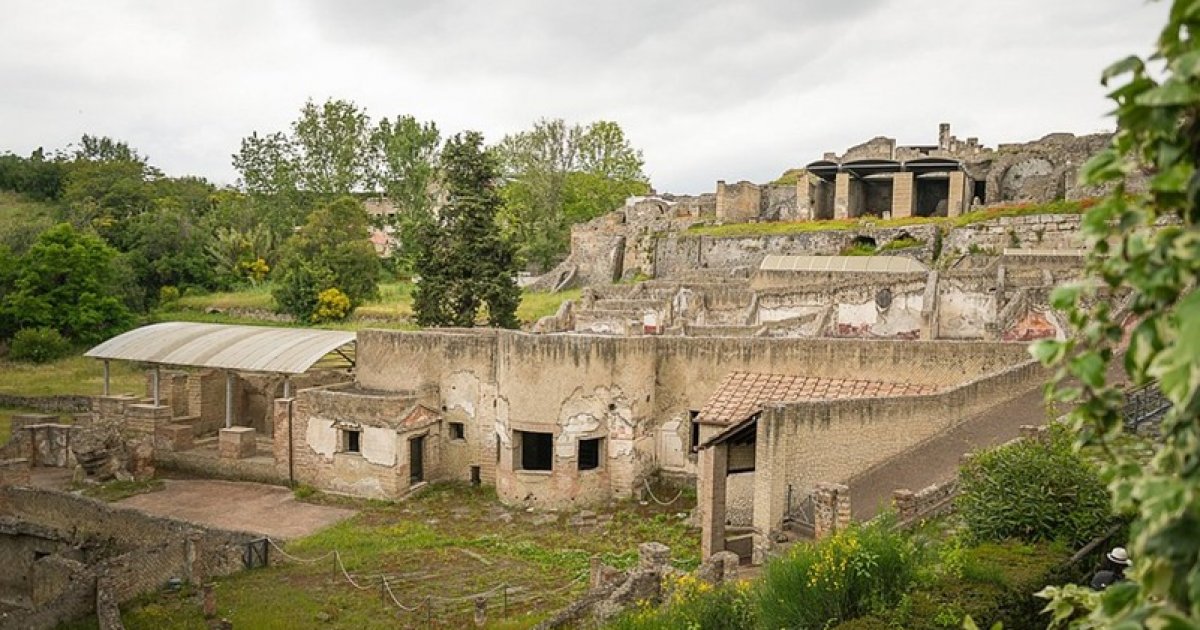
The Villa Imperiale, located just outside Pompeii’s ancient walls near Porta Marina, is one of the most fascinating residences in the ancient city.
Its modern name does not indicate an actual connection to the imperial family; it was chosen simply to highlight the villa’s grandeur and prestige.
Construction began in the final decade of the 1st century B.C., during the Augustan age, likely as an elegant private residence belonging to a wealthy and influential family. The villa occupied a panoramic position overlooking the sea and the Gulf of Naples — an ideal setting for impressing guests during banquets and social gatherings.
The history of the building alternates between periods of splendor and decline. In A.D. 62, a violent earthquake struck Pompeii and caused severe damage to the villa. Although restoration work followed, only a few years later the property was confiscated by the State under the orders of the imperial prefect Titus Suedius Clemens. During this phase, the terrace of the Temple of Venus was expanded, and the upper floor of the villa was demolished. Parts of the residence were then converted into storage and service areas.
After the eruption of Vesuvius in A.D. 79, the Villa Imperiale was buried beneath volcanic ash and remained hidden for centuries. It was first rediscovered during the Bourbon period, when several rooms were excavated — unfortunately stripped of their furnishings and mosaic pavements. The site was later reburied for protection.
During World War II, bombing raids over Pompeii caused significant damage in the area, exposing parts of the villa once again and renewing scholarly interest. Excavations resumed in 1947 under the direction of Amedeo Maiuri, revealing the main rooms, their decorative schemes, and the architectural layout.
In recent decades, extensive restoration campaigns have brought new life to the wall paintings and made the site accessible once more. Today, the Villa Imperiale is essential for understanding the transition of Pompeian art between the Third and Fourth Styles, as well as for experiencing the refined atmosphere of a luxurious seaside residence.
Let me leave you with an interesting fact: the villa’s rediscovery in 1947 was led by Amedeo Maiuri, one of Italy’s most important archaeologists of the 20th century. As superintendent of the Pompeii excavations for over thirty years, Maiuri transformed the site from a simple “museum of ruins” into a living place to be studied, interpreted, and experienced.