SANT PAU MODERNIST COMPLEX, Architecture And Urban Planning - Ai Voice
 Language: English / USA

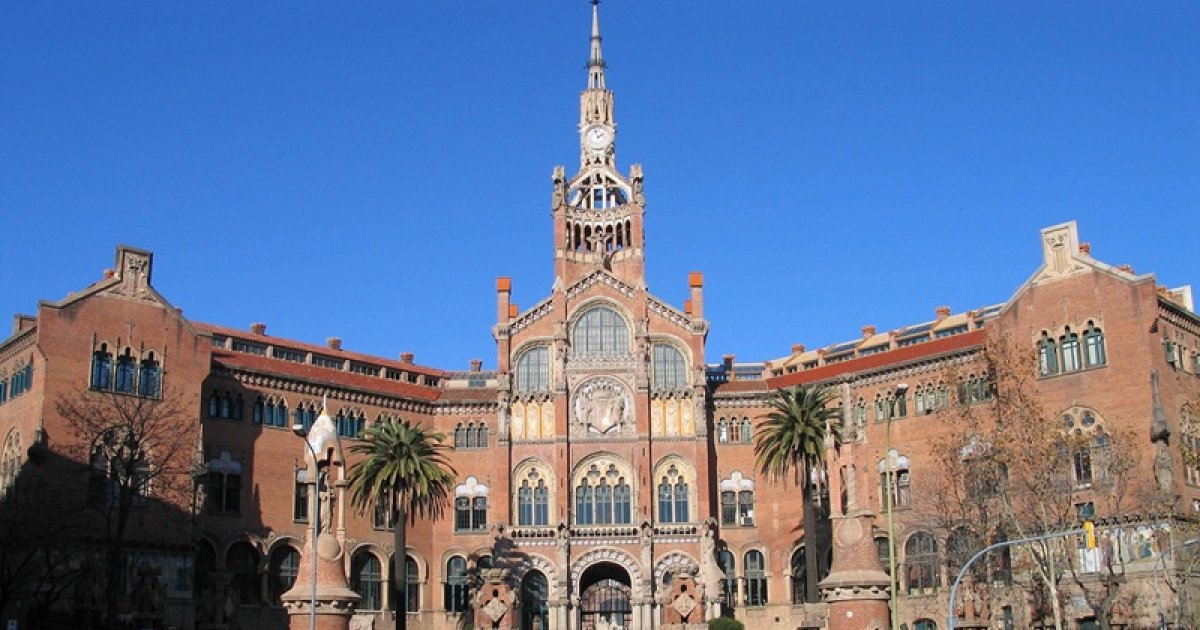
The Sant Pau Art Nouveau Site was designed as a small city made of pavilions, tree-lined avenues, gardens, and colorful mosaics.
Lluís Domènech i Montaner’s innovative idea was to transform a place of healing into a harmonious urban microcosm.
When the architect designed the Hospital de la Santa Creu i Sant Pau at the beginning of the 20th century, medicine was rapidly evolving.
People were beginning to understand the importance of hygiene, fresh air, and natural light in the healing process. Hospitals were no longer meant to be dark, enclosed spaces, but rather open, bright, and healthy environments.
This is how the concept of a “garden city of health” was born — an urban model that brought together science and art, architecture and well-being.
The Sant Pau complex was laid out according to a symmetrical plan centered on two main axes:
– a vertical axis linking the monumental entrance to the Administration Pavilion, and
– a horizontal axis where the patient pavilions were distributed.
Each building was independent but connected to the others through an underground gallery system: wide, ventilated corridors that allowed patients, staff, and materials to move around without having to go outside.
Domènech designed twelve main pavilions surrounded by gardens, each one dedicated to a different medical specialty.
Every pavilion featured large windows, light-colored interiors, and green spaces where patients could rest and breathe fresh air.
This balance between functionality and beauty perfectly embodies the philosophy of Catalan Modernisme — a “total art” that combines engineering, craftsmanship, and nature in a single creative expression.
For Domènech, architectural form was never an end in itself; it was part of a universal language capable of conveying harmony, compassion, and faith in progress.
Today, as you walk through the avenues of the Sant Pau Art Nouveau Site, it’s easy to forget that this place was originally built as a hospital.
Floral decorations, ceramic-tiled domes, and pavilions nestled in greenery still reflect the vision of an architect who knew how to unite art and medicine, beauty and humanity.
An interesting fact: All the pavilions are still connected today by more than one kilometer of underground galleries — an extraordinary infrastructure for its time, designed to protect and assist both patients and staff. It remains the perfect symbol of the union between beauty and functionality that defines the entire complex.