SANT PAU MODERNIST COMPLEX, Art And Symbolism Pavilions - Ai Voice
 Language: English / USA

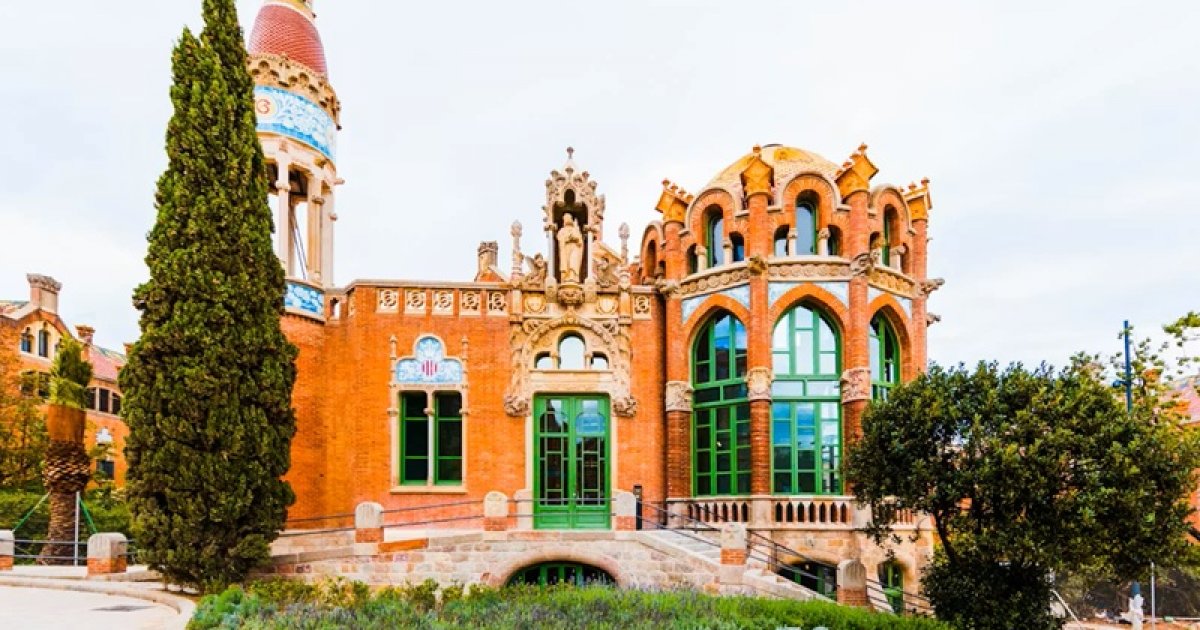
Walking through the pavilions of the Sant Pau Art Nouveau Site feels like strolling through an open-air museum, where every detail was designed to convey meaning.
The entire complex is a triumph of materials and colors, where stone, brick, glazed ceramics, stained glass, and wrought iron coexist in harmony.
Polychrome ceramics cover domes, columns, and cornices, reflecting sunlight in countless shades.
Stained-glass windows, often arranged in floral or geometric patterns, filter natural light.
Wrought iron, crafted with elegance and creativity, decorates railings, lampposts, and gates with forms inspired by nature — leaves, branches, and symbolic animals.
The iconography that runs throughout the complex is incredibly rich and reveals the moral and spiritual intent of the project.
Alongside religious figures such as saints, crosses, and angels — representing faith and Christian charity — there are secular symbols: allegories of science, knowledge, and human solidarity.
In this dialogue between the sacred and the secular lies the essence of Catalan Modernisme, a movement that sought to reconcile tradition and modernity, faith and progress.
Special attention was given to sculptural decoration.
Artists Eusebi Arnau and Pau Gargallo, who had already worked on the Administration Pavilion, created reliefs and statues adorning the façades and interiors.
Arnau sculpted figures symbolizing virtues such as compassion, hope, and moral strength.
Gargallo introduced new dynamism into the posture and expressions of the figures, making them more human and emotionally engaging.
Each pavilion has its own decorative style, consistent with the overall design yet unique in its colors, forms, and symbols.
As you walk through the site, you’ll notice animal symbols everywhere: a dragon, a pelican, a peacock, an owl...
These are not simple decorations — each one represents a moral virtue or human value.
The dragon symbolizes courage and protection; the pelican, sacrifice and charity; the peacock represents rebirth; the owl, wisdom.
Every mosaic, every stained-glass window, and every piece of wrought iron is a reminder of a time when beauty was considered an essential part of well-being and architecture became an act of compassion.
An interesting fact: Inside the Operating Pavilion stands a large glass-walled operating room designed to make maximum use of natural light. A century ago, when electric lighting was still limited, this was a truly revolutionary solution.