ROYAL PALACE OF CASERTA, Introduction To The Palatine Library - Ai Voice
 Language: English / USA

Queen Maria Carolina of Habsburg, as I have already mentioned, was a woman of great culture, who espoused the ideologies of the Enlightenment and always tried to surround herself with artists and academics.
It was at her behest that a splendid library was built in the Royal Palace of Caserta, which over time was enriched with precious volumes, until it numbered some 14,000, half of which were acquired during the reign of Maria Carolina.
There are works of literature, texts on mathematics, science, law, art, and several librettos of operas, ballets and music, many relating to performances staged in the best theatres of the Kingdom, testifying to the great interest the royals had in the theatre.
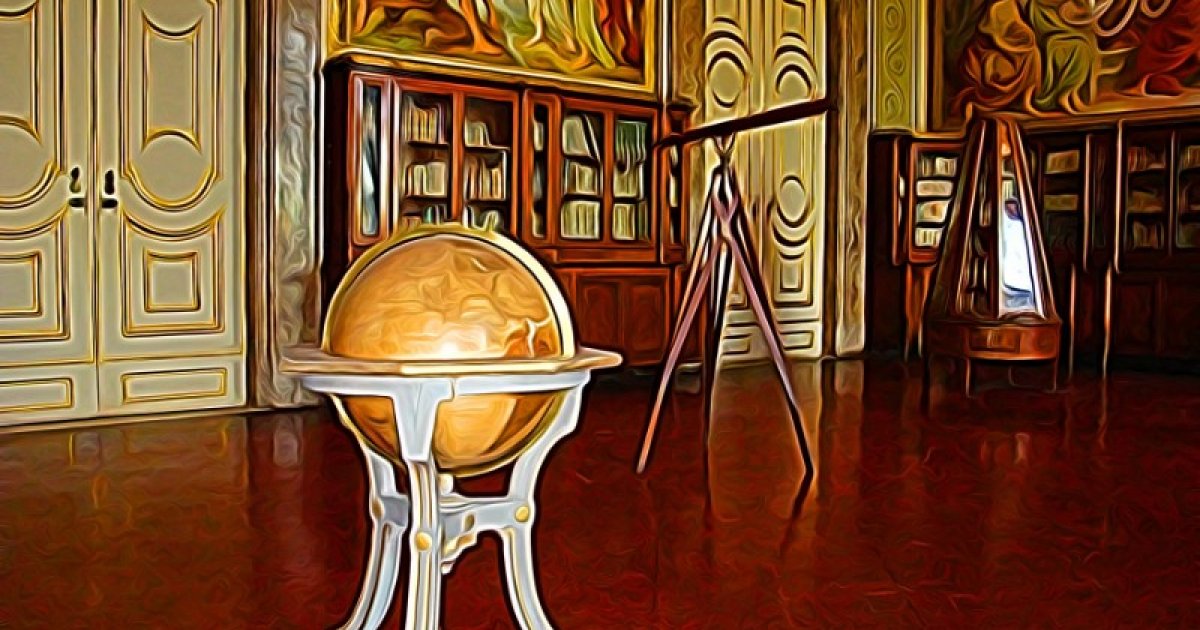
The Palatine Library consists of two antechambers for reading and three rooms for consulting the works. In the first and third of these rooms, you can still admire the original 18th-century furniture, with beautiful mahogany shelving. In the first room, you can also see Etruscan-style vases, inspired by those found in the archaeological excavations ordered by the Bourbons at Pompeii and Herculaneum, while in the third room you will find two wooden globes reproducing the celestial vault and the terrestrial globe, the work of the French cartographer Robert de Vaugondy, donated by the King of France. In the same room you will also find four large frescoes, painted by the German painter Heinrich Friedrich Füger in 1782, adorning the walls. They represent themes from Greek mythology and their purpose was to extol the importance of the arts and science.
Among these paintings is one in particular, The School of Athens, which caused a stir at the time because it seemed to have a certain affinity with Freemasonry, a secret association, divided into lodges, whose ideal aim was to break down ethnic, religious and political barriers, promoting the search for truth in order to create a better world. However, Freemasonry was opposed by the Church, which branded it as a heretical movement.
Here’s an interesting fact: Queen Maria Carolina was even said to be a member of a secret masonic lodge, composed only of women. After all, her father, Franz Stephan of Lorraine, was also a member of one of the most important Viennese Masonic lodges.